
Small-Group Online Tuition vs 1-to-1: Best Fit
Compare small-group online tuition and 1-to-1 tuition for primary students, including attention, confidence, cost, and teacher support.

Small-group online tuition can give many primary school students enough attention when the class is genuinely small, active, and built around feedback. 1-to-1 tuition is usually better when a child has deep foundational gaps, strong anxiety in groups, or needs urgent targeted help.
If you are comparing small group online tuition vs 1 to 1 for your child, do not stop at "How many students are in the class?" Ask the more useful question: will the teacher notice how my child is thinking, correct mistakes early, and keep my child engaged enough to try?
Last updated: 23 July 2026
Some children perk up when they learn with peers. They hear classmates ask questions, see common mistakes happen in real time, and realise they are not the only one who finds a concept tricky. Other children need the quiet, personalised pace of 1-to-1 before they are ready for a group.
Key Takeaways
Small-group online tuition works when your child is still visible to the teacher, not hidden inside a large online class.
1-to-1 tuition gives more direct tutor time, but it can feel too quiet or adult-led for some children.
Peer mistakes help. In Primary Math and Science, one child's mistake is often the same mistake others need to avoid.
Consider 1-to-1 tuition first if your child is far behind, anxious in groups, or needs highly specific remediation.
Use a trial class to watch for participation, teacher feedback, and whether your child can explain one thing afterwards.
What "attention" actually means in tuition
Parents often use "attention" to mean tutor-student ratio. That is understandable. If there is one tutor and one child, it feels as if the child must be getting more help.
But attention is more specific than that. It means the teacher can see how your child got the answer, ask your child to explain their thinking, correct mistakes before they become habits, and notice quiet guessing or passive nodding.
A child can sit in a 1-to-1 lesson and still wait passively for the tutor to lead every step. A child can also sit in a small group and be asked to explain, corrected at the right moment, and stretched by classmates' answers.
In Primary Math, the teacher should see whether your child chose the right heuristic, drew the bar model correctly, or skipped a step. In Primary Science, the teacher should spot the small things that cost marks: an answer without evidence, or a concept used without explaining why.
That is real attention.
Small-group online tuition vs 1-to-1 tuition: quick comparison
Factor | Small-Group Online Tuition | 1-to-1 Tuition |
Teacher attention | Shared, but still frequent if the group is small | Fully focused on one child |
Pacing | Follows a structured class pace | Can slow down or speed up immediately |
Peer learning | Stronger because children learn from classmates' questions and common mistakes | Limited because there is no peer discussion |
Confidence | Good for children who benefit from seeing others try | Better for children anxious about making mistakes publicly |
Engagement | Often livelier because children learn with peers | Can feel boring or intense for some children |
Cost | Usually more sustainable long term | Usually higher, especially with experienced tutors |
Best fit | Moderate gaps, structured practice, confidence-building | Deep gaps, urgent catch-up, specific remediation |
For parents, the lesson is simple: one format does not always win. Small groups can work well when the group is truly small and the teaching is sharp.
When small-group online tuition works well
Small-group online tuition works best when your child does not need every minute customised, but still needs structure, feedback, and encouragement. It is a good fit if:
your child can follow basic online class routines
your child has moderate gaps, not severe foundational weakness
your child answers when called, even if they are quiet at first
your child learns from seeing different approaches
your child becomes more alert when classmates are also trying
Imagine Mei, a P5 student, kept making the same fraction mistake. She could add fractions when the denominators were the same, but rushed when they were different. In a 1-to-1 lesson, the tutor could correct her directly. In a small group, something different happened: another child made the same mistake first.
The teacher paused, showed both answers, and asked the group to spot what changed. Mei corrected her own working before the teacher called on her.
That kind of peer learning is easy to underestimate. Children often remember a classmate's mistake because it feels close to their own thinking.
In Primary Science, the same thing happens with open-ended questions. One child writes the correct concept but leaves out evidence from the experiment. Another forgets to compare both setups. When the teacher turns that into a group discussion, every child learns from the mistake before losing marks for it later.
This is why small groups can be more engaging than 1-to-1 for some children. The lesson has classmates, different answers, small moments of surprise, and the relief of seeing that other children also get stuck.
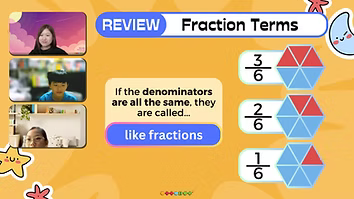
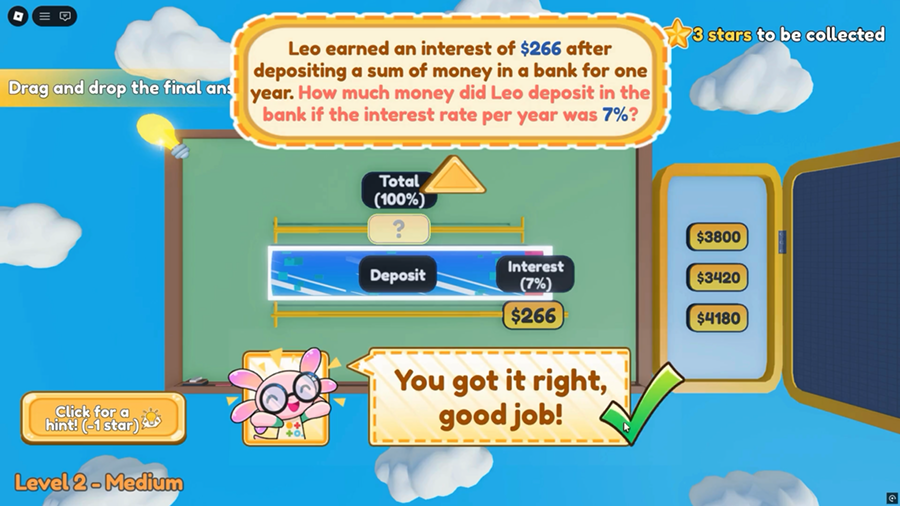
Ottodot's online Primary Math and Science classes use small-group teaching with interactive practice, including Roblox-based lesson tasks tied to MOE syllabus concepts. The point is not random play. The game format gives children something to do, answer, test, and correct with teacher guidance.
For related format questions, read our guide to best online tuition options in Singapore.
When 1-to-1 tuition is better
1-to-1 tuition is better when the child needs a level of diagnosis or pacing that a group cannot reasonably provide. Choose 1-to-1 tuition if:
your child is far behind the class level
your child has deep gaps in basic operations, fractions, ratio, or Science concepts
your child freezes when asked to speak in front of peers
your child needs urgent exam support for one weak component
your child needs a pace much slower or faster than classmates
your child requires constant individual prompting to stay on task
For some children, 1-to-1 tuition is the right first step. A P6 child who is still shaky with multiplication and division may not be ready for a small group on PSLE ratio questions. They may need 1-to-1 help to rebuild the foundation before joining a group for regular practice.
The caution is that 1-to-1 can become too adult-led for some children. If the tutor prompts every step, the child may stop trying independently. Some children also find the intensity tiring because there are no peer questions or shared mistakes to learn from.
So do not choose 1-to-1 because it sounds more premium. Choose it when your child truly needs that level of individual attention.
What to watch during a small-group online trial class
A trial class should help you answer one question: did my child get seen? Use this checklist while observing:
Trial Signal | Good Sign | Watch-Out |
Participation | Child answers or attempts tasks | Child watches silently throughout |
Feedback | Teacher corrects reasoning | Teacher only marks right or wrong |
Class size | Teacher can call on each child | Many children remain invisible |
Confidence | Child is willing to try | Child freezes or shuts down |
Understanding | Child can explain one concept after class | Child says "okay" but cannot explain anything |
Focus | Game or activity leads back to learning | Activity becomes unrelated play |
Also ask for the actual class size or class-size cap. Two to five students gives the strongest chance of small-group attention. Six to eight can still work if the teacher has strong routines. Once a class reaches 10 or more, parents should ask more carefully how quiet children are noticed.
After the class, ask your child one simple question: "What is one thing you learnt or corrected today?"
Do not expect a polished explanation. A short answer is enough. You are listening for signs that your child was thinking, rather than sitting through the lesson politely.
If your child says, "Someone else made the same mistake I made," that can be a good sign. The group did something useful. It made the mistake visible, normal, and correctable.
For children who struggle with attention more broadly, this guide on why children lose focus while studying may help you separate class-format issues from general study habits.
FAQ: small-group online tuition vs 1-to-1 tuition
Is small-group online tuition enough attention for primary school students?
Yes, if the group is genuinely small and the teacher checks each child's understanding throughout the lesson. It may not be enough if your child has deep gaps or needs constant individual prompting.
Is 1-to-1 tuition better than small-group tuition?
Not always. 1-to-1 gives more individual time, but small-group tuition can provide structure, peer learning, and strong feedback when the class is well run.
Can my child switch from 1-to-1 to small-group tuition later?
Yes. Some children use 1-to-1 tuition to close urgent gaps first, then move to small-group tuition for structured long-term practice.
Conclusion: choose the format that helps your child think
Small-group online tuition and 1-to-1 tuition can both work. The right choice depends on what your child needs now.
Choose 1-to-1 if your child needs deep diagnosis, a slower pace, or urgent help with a specific weakness. Choose small-group online tuition if your child can learn from structure, peer energy, common mistakes, and regular teacher feedback.
If budget is part of the decision, compare typical primary tuition fees in Singapore before choosing between small-group online tuition and 1-to-1 support.
Do not assume 1-to-1 is automatically better because the tutor is fully focused on one child. For some children, learning with peers makes the lesson less boring, more active, and easier to remember.
If you are deciding whether small-group online tuition gives your child enough attention, start the quiz and watch how your child responds. Look for active answering, teacher feedback, and whether your child can explain what they learnt afterwards.