
Why Your Child Loses Focus While Studying (And What Actually Helps)
Your child has been at their desk for 40 minutes. You check in and find two questions answered, a pencil that has been chewed through, and a child who insists they have been "thinking." Sound familiar? This is one of the most common frustrations parents in Singapore share with us. The child is not being defiant. They are not lazy. Something specific is happening in their brain during study time that makes sustained focus genuinely difficult, and understanding what it is makes it far easier to...
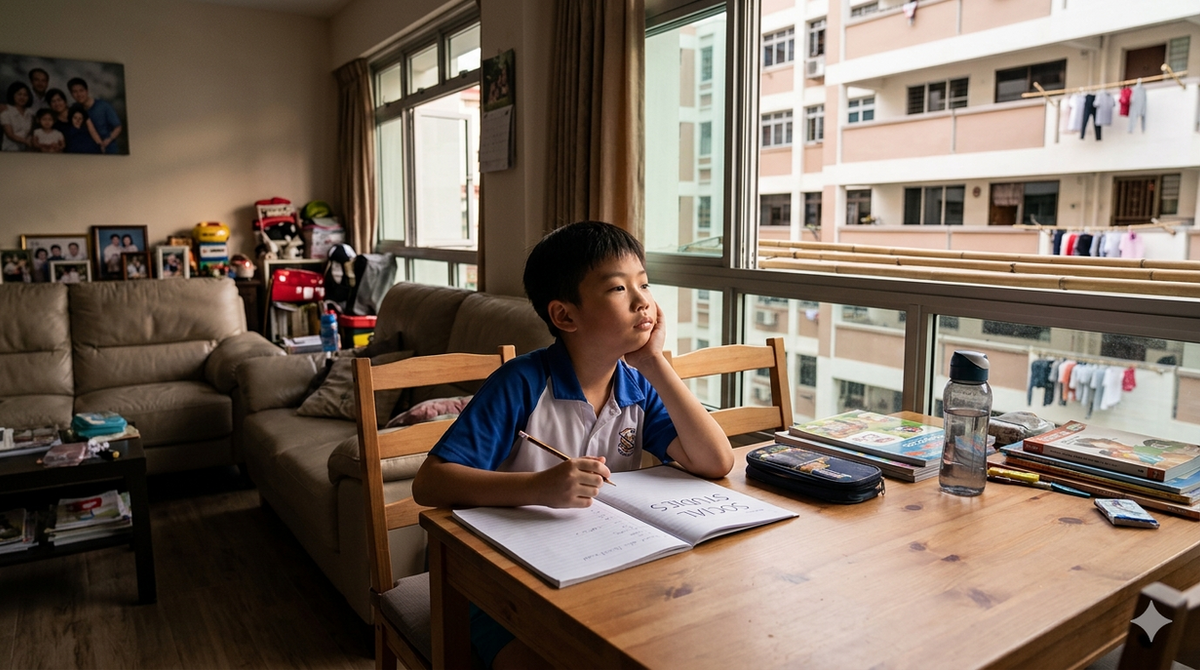
Your child has been at their desk for 40 minutes. You check in and find two questions answered, a pencil that has been chewed through, and a child who insists they have been "thinking." Sound familiar?
This is one of the most common frustrations parents in Singapore share with us. The child is not being defiant. They are not lazy. Something specific is happening in their brain during study time that makes sustained focus genuinely difficult, and understanding what it is makes it far easier to help.
In this guide, we walk through the real reasons primary school children lose focus during work, what parents often misread as a behaviour problem, and the strategies that actually make a difference at home.
It Is Not a Willpower Problem
Most parents respond to focus problems by pushing harder. More reminders, stricter rules, longer study sessions. These rarely work, because focus is not a character trait your child can simply choose to switch on.
Focus is a cognitive resource. Like a muscle, it fatigues with use.
Research by Baumeister and colleagues established the concept of cognitive depletion, finding that sustained mental effort draws on limited attentional resources that diminish over the course of a day. For primary school children, whose prefrontal cortex (the brain region responsible for sustained attention and self-regulation) is still developing well into their teenage years, this depletion happens faster and more noticeably than in adults.
A child who arrives home from six hours of school, sits through an hour of reading or enrichment, and is then asked to do an hour of homework is not being asked to do something easy. They are being asked to sustain cognitive effort on an already-depleted system.
The behaviour, staring, fidgeting, re-reading the same question, looks like laziness from the outside. The cause is physiological.
The Four Most Common Causes of Lost Focus
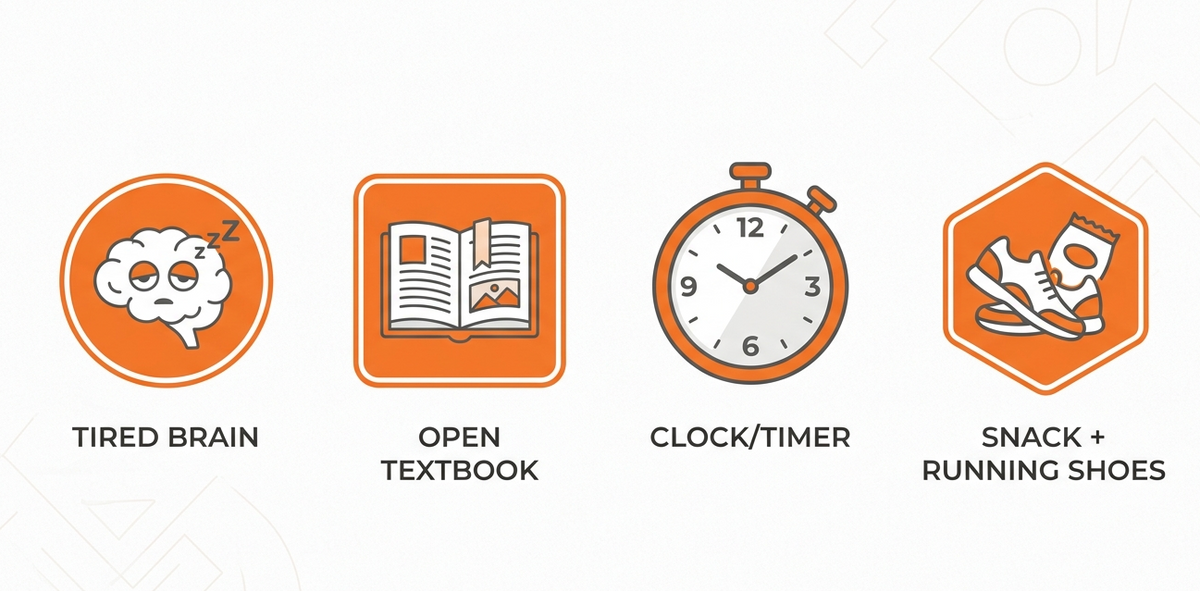
Understanding why focus breaks down is the first step. Here are the four causes we see most often in primary school children.
1. Cognitive Fatigue After School
Primary school days in Singapore are demanding. Children engage in listening, note-taking, problem-solving, and managing peer interactions for six or more hours. A study by Marcora, Staiano, and Manning demonstrated that prior mental effort significantly impairs subsequent cognitive performance, even when physical energy is unchanged.
This is why starting homework immediately after school often produces poor results, even when it feels productive. The window between school dismissal and dinner is frequently the lowest point of the day for cognitive readiness.
2. Material That Is Too Hard or Too Easy
Psychologist Mihaly Csikszentmihalyi's research on the concept of "flow" found that sustained engagement requires a task to sit at the right difficulty level: challenging enough to require effort, but achievable enough to feel possible. When a task is genuinely beyond a child's current ability, they disengage and seek an escape. When it is far too simple, attention drifts almost immediately.
For Singapore primary school students working through curriculum-aligned content, this mismatch is particularly common in Mathematics, where children may be attempting word problems before they have automated the foundational computation skills those problems rely on.
3. No Clear Endpoint
"Do your homework" is an open-ended instruction. Children, particularly those in Primary 1 to Primary 4, struggle to sustain effort when they cannot perceive a finish line. Research by Locke and Latham consistently shows that specific, time-bounded goals produce significantly better performance than vague ones. "Finish these five questions, then take a break" gives the brain something concrete to aim for.
4. Physical State and Environment
A hungry child cannot concentrate. A child who has not moved in two hours will fidget. A screen within their sightline creates constant attentional competition. These factors are not minor. Research published in Neuroscience found that even a single brief bout of moderate aerobic activity measurably improved on-task cognitive performance in primary-aged children.
What Parents Often Misread as a Behaviour Problem

One of the most commonly misunderstood focus issues in primary school children is re-reading. A child who reads the same question four or five times without making progress is not being careless. They are experiencing cognitive overload.
Baddeley and Hitch's working memory model, one of the most cited frameworks in educational psychology, explains this clearly. Working memory has a limited capacity. A Primary 5 word problem that requires reading comprehension, mathematical reasoning, and multi-step calculation simultaneously can exceed that capacity in children who have not yet automated some of those component skills. When working memory is full, progress stalls.
This is especially relevant to Singapore's Paper 1 and Paper 2 Mathematics format, where word problems regularly require students to hold multiple pieces of information in mind while constructing a bar model or working through ratio steps. A child who is still effortfully retrieving multiplication facts while attempting a ratio problem has less working memory available for the reasoning itself.
The distraction is not attitude. It is a signal that the cognitive load exceeds current capacity.
Practical Strategies That Actually Work

Here are four approaches that make a consistent difference for most primary school children.
Schedule a Rest Break Before Homework
Allow at least 30 minutes of unstructured downtime after school before homework begins. Physical activity during this period is particularly effective. A study by Hillman and colleagues found that a single bout of moderate aerobic exercise improved children's cognitive performance and attention on academic tasks. A short walk, a trip to the void deck, or free play outside resets the attentional system more effectively than screen time.
Use Time-Limited Sessions With Clear Goals
Structure study time in 15 to 20 minute blocks with 5 to 10 minute breaks in between, rather than long uninterrupted sessions. For Primary 1 to Primary 3 children, 10 to 15 minute blocks are more appropriate. Set a timer your child can see. Goal-setting research by Locke and Latham shows that knowing when a session ends makes it significantly easier to sustain effort until it does.
Match the Difficulty to Current Ability
If your child is constantly stuck, the material is likely above their current readiness level. If they finish in two minutes, it is too easy for meaningful practice. The productive range is where your child can complete most tasks with genuine effort, occasionally needing to think harder, but not hitting a wall. In Singapore Mathematics, this often means returning to an earlier topic to close a gap before moving forward.
Use Game-Based Practice for Topics They Avoid
For children who disengage most on specific topics, game-based formats can rebuild engagement by restoring the conditions that support focus: immediate feedback, clear goals, and appropriate challenge levels.
Ottodot's resource hub offers free interactive math and science games across every P1 to P6 topic, aligned to the Singapore primary school curriculum. No sign-up needed.
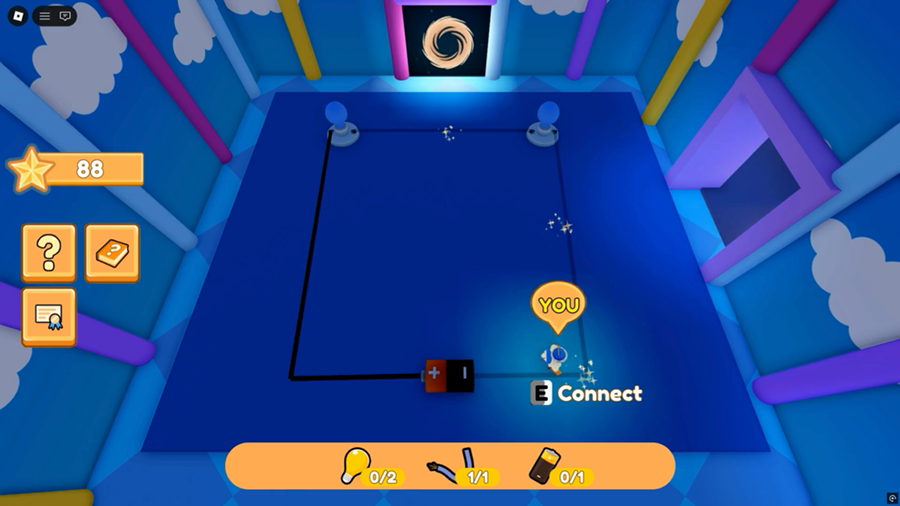
Browse the Ottodot resource hub and find the game that matches your child's current level and topic.
When the Focus Problem Is Really a Fluency Problem
One pattern many parents do not recognise: children who lose focus on math or science homework often do so because foundational skills are not yet automatic.
A Primary 4 student who has not fully internalised their multiplication tables will spend cognitive effort on every calculation embedded in a word problem. That extra effort consumes working memory that should be available for reasoning. Attention exhausts faster as a result.
Sweller's cognitive load theory explains why this happens: when foundational knowledge is not yet automatic, it occupies the same limited working memory needed for higher-order thinking. Fluency in core skills, such as number facts, multiplication tables, and standard math processes, is not separate from problem-solving ability. It directly supports it.
Five to ten minutes of targeted daily practice on foundational skills, ideally in a short, goal-oriented format, is enough to build meaningful fluency over two to three weeks. That fluency then frees up working memory for the harder reasoning tasks that SA1 and SA2 papers demand.
Parent Checklist: Before You Conclude Your Child Has a Focus Problem
Before deciding your child has an attention issue, run through this list:
Is there a screen within their sightline while they work?
Did they eat something before sitting down?
Did they get any physical activity after school?
Did homework start immediately after school with no break?
Is the material matched to their current ability level?
Do they have a clear endpoint or goal for the session?
Most focus problems in primary school children are resolved by addressing one or more of these factors. The environment is often the issue, not the child.
The Key Takeaway
Focus problems during study time are common, and they are rarely about willpower or attitude.
The most effective changes are structural: adjusting when study happens, shortening sessions, setting clear goals, and building foundational fluency so that harder tasks feel manageable rather than overwhelming. Most families see meaningful improvement within two to three weeks of applying even one or two of the changes above.
If your child consistently struggles to engage with math or science, Ottodot's game-based approach is designed for exactly this situation. Live classes run through Roblox hold attention in ways that worksheets and video lessons do not, and the resource hub offers free practice between sessions, aligned to the Singapore primary school curriculum from P1 to P6.
Book a trial class and see how your child responds to learning through gameplay.