
See the concept
Students use visuals, demonstrations, and guided examples to make abstract systems, cycles, and interactions easier to understand.
For Primary 4-6 students, this class strengthens scientific understanding, reasoning, and application skills through structured teaching and interactive Roblox games, so students can explain Science ideas with more confidence.
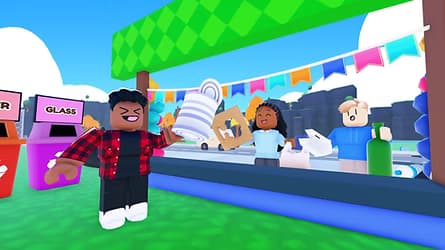




A consistent rhythm so kids know what to expect, and parents can see the progress.
Quick review of last lesson's homework and addressing questions.
Concept teaching, worked examples, and live homework Q&A.
Apply the new concept inside a custom-built Roblox world.
Recap key takeaways and set expectations for the next lesson.
Upper-primary Science is not only about remembering facts. We help students connect observations, keywords, and cause-effect reasoning so open-ended questions feel more manageable.
Students use visuals, demonstrations, and guided examples to make abstract systems, cycles, and interactions easier to understand.
Teacher prompts help students choose precise Science vocabulary instead of vague everyday language that loses marks.
Practice builds the habit of linking observations to conclusions, so answers become complete enough for PSLE-style marking.
Lessons are carefully structured to align with the MOE Primary School syllabus.
Students work through P5 and P6 Science topics with clear teacher guidance, visual examples, and interactive application.
We use topic-specific visuals and practice to help students connect Science ideas to exam-style reasoning.
Students visualise how heat moves and apply the concept through guided practice.
Students connect plant reproduction concepts with interactive Science scenarios.
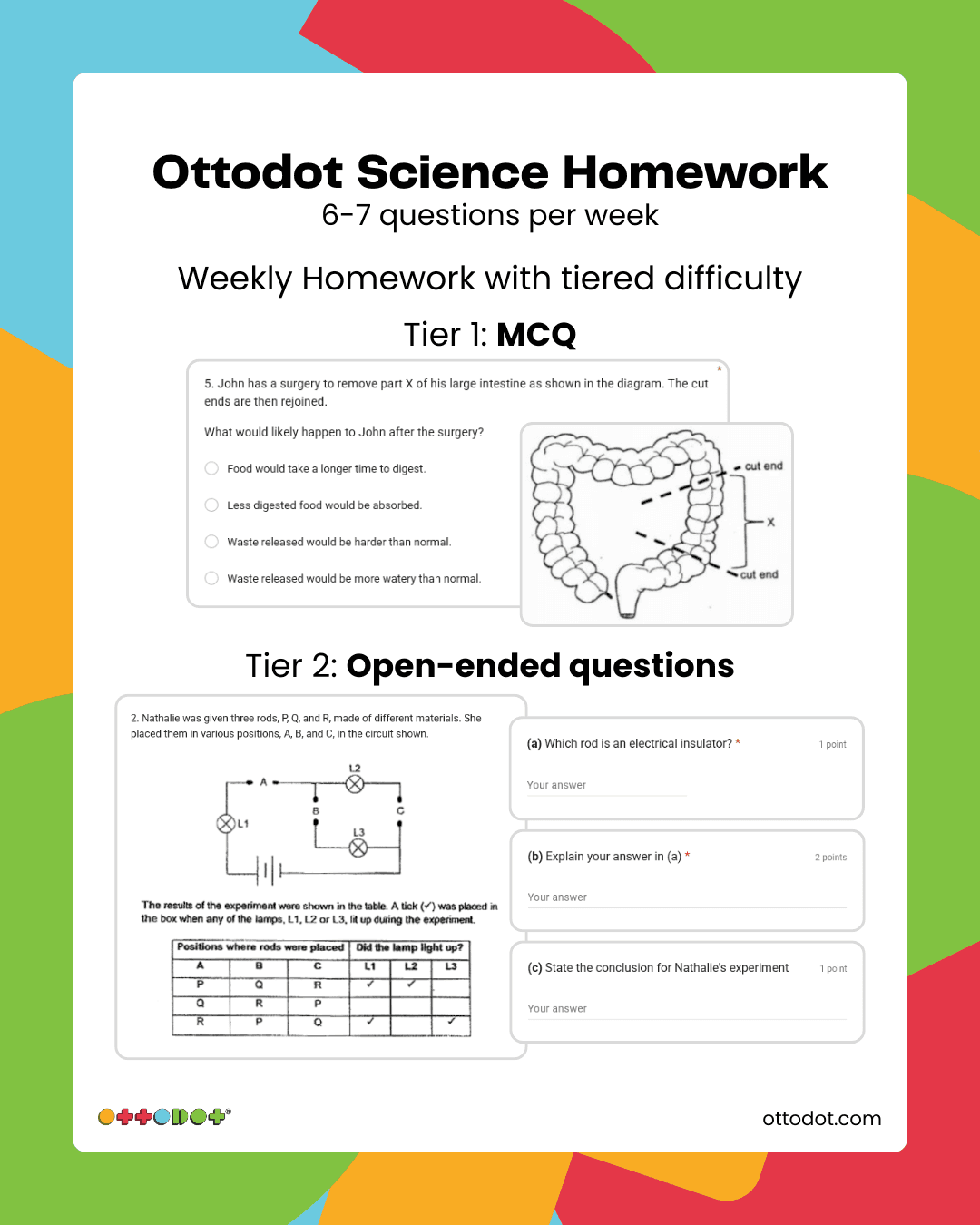
We teach students how to structure answers with clear keywords, observations, explanations, and checks so they can handle open-ended Science questions with more confidence.
Lessons focus on PSLE-style application, common question patterns, teacher feedback, and game-based practice so students build both understanding and exam readiness.
Try the subject fit first, then add the second subject at a lower trial cost if your child needs support across both areas.