
P3 Living and Non-Living Things: Classification Guide
Help your child classify living and non-living things in P3 Science, compare animal groups, and explain answers using clear examples and practice questions.
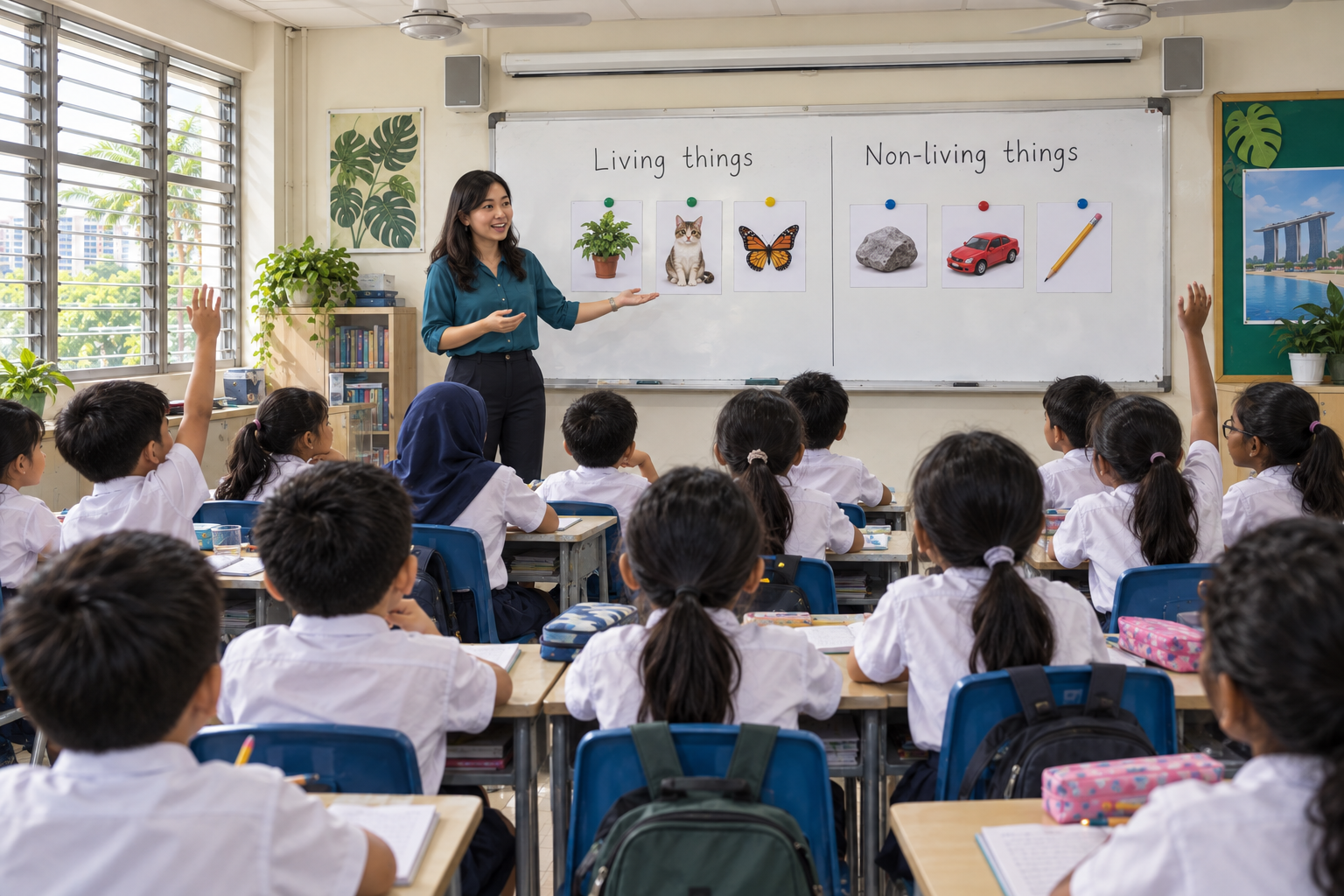
In P3 living and non-living things, your child learns how to tell whether something is alive and explain why it belongs in a particular group. The topic covers plants, animals, fungi and bacteria, with plenty of practice looking closely at their features.
A toy car moves across the floor, while a potted plant stays put. So why is the plant alive and the car isn't? If your child gets stuck here, start with what they can observe, then talk about which clues tell them something is living.
Key Takeaways
Living things need water, food and air, and can grow, respond and reproduce.
Movement alone cannot tell us whether something is living.
Classification means applying a clear grouping rule consistently.
Plants, animals, fungi and bacteria belong in the P3 discussion.
An explanation should name the characteristic that supports the answer.
Quick Answer
Look for the characteristics of living things, then use the grouping rule given in the question. Movement alone does not prove that something is alive.
Recommended Next Guides and Practice
What does P3 living and non-living things cover?
The MOE Primary Science syllabus places this topic under Diversity. Children observe living and non-living things, compare characteristics and organise living things into broad groups.
There are two questions to work through: “Is it living?” and “Which group does it belong to?” To answer the first, your child needs to think about the characteristics of life. For the second, they need to find features that members of a group share.
Your child's school determines its teaching sequence. Keep the school topic list nearby when revising, and use our P3 Science overview to see how classification connects with the rest of the year.
Recognising life takes more than one observation
A toy can move with power from a battery. That doesn't make it alive. A plant, meanwhile, can stay in the same spot and still grow or respond to its surroundings. Your child may need to watch it over several days to notice those changes.
A response is a reaction to a change in the surroundings. It can happen slowly: a plant shoot may grow towards light. Ask your child where the light is coming from and how the shoot grows towards it. This helps them describe what the plant is responding to.
The word “food” can cause confusion. Plants need food, even though they don't eat meals like animals do. Soil isn't their food. Keep this explanation simple for P3; the details of how plants make food can wait until your child studies them later.
Your child may also ask about young animals that cannot reproduce yet. They are still alive. The characteristics describe living things as a group; you don't have to see every one of them happening in a single animal or plant during a short observation.
How to classify living things
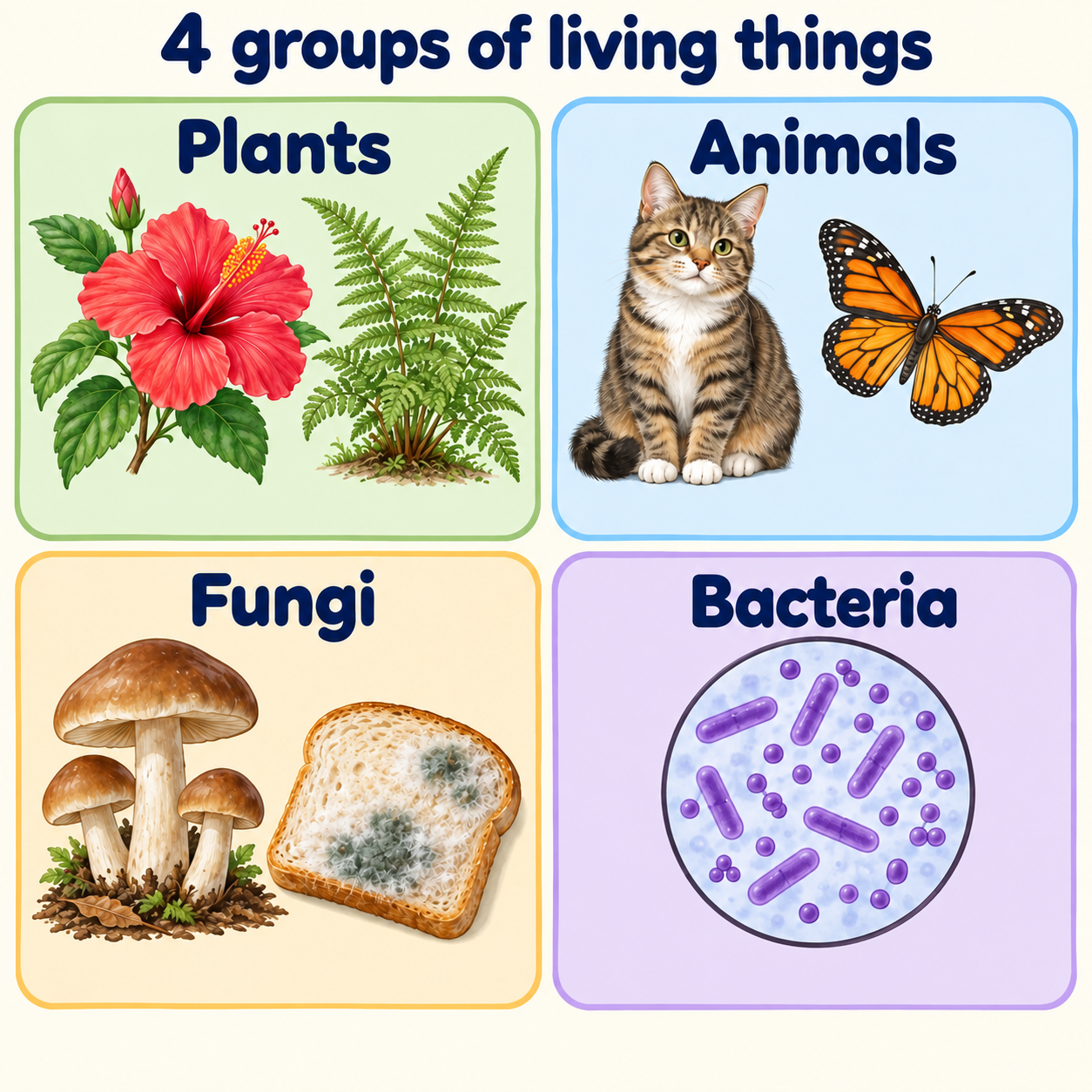
To classify something, start with a feature you can check. Does the animal have feathers? How many legs can you count? Can this kind of plant produce flowers?
Use the same rule for every item. If the question asks your child to group animals by body covering, they need to compare body coverings. Where the animals live won't answer that question.
The Admiralty Primary Science resources organise the topic into plant diversity, animal diversity, and fungi and bacteria. Use the following as a starting map, then practise with the pictures and information supplied in a question.
Group | What to focus on |
Plants | Flowering and non-flowering groups; a flowering plant need not have visible flowers today |
Animals | Mammals, birds, fish, reptiles, amphibians and insects; compare relevant features |
Fungi | Recognise examples such as mushrooms, mould and yeast as a separate group from plants |
Bacteria | Recognise bacteria as living things, although individual bacteria are too small to see unaided |
For animal practice, start with clear features. Feathers help identify birds. Hair or fur is characteristic of mammals. Adult insects have six legs and three main body parts. Familiar fish have fins and gills; reptiles commonly have dry, scaly skin; amphibian examples include frogs.
Always check the information in the question too. An animal isn't necessarily a fish just because it lives in water. If your child makes a guess from the background of a picture, ask them to point out a feature of the animal that supports their answer.
When revising, spend time comparing features and explaining the groups. Your child will get more from being able to say why two animals belong together than from learning extra animal names without understanding their features.
Worked classification examples
Try these original practice questions together. The suggested answers show how to explain the reasoning; they are not an official marking scheme.
Worked Example 1: Does movement prove that something is alive?
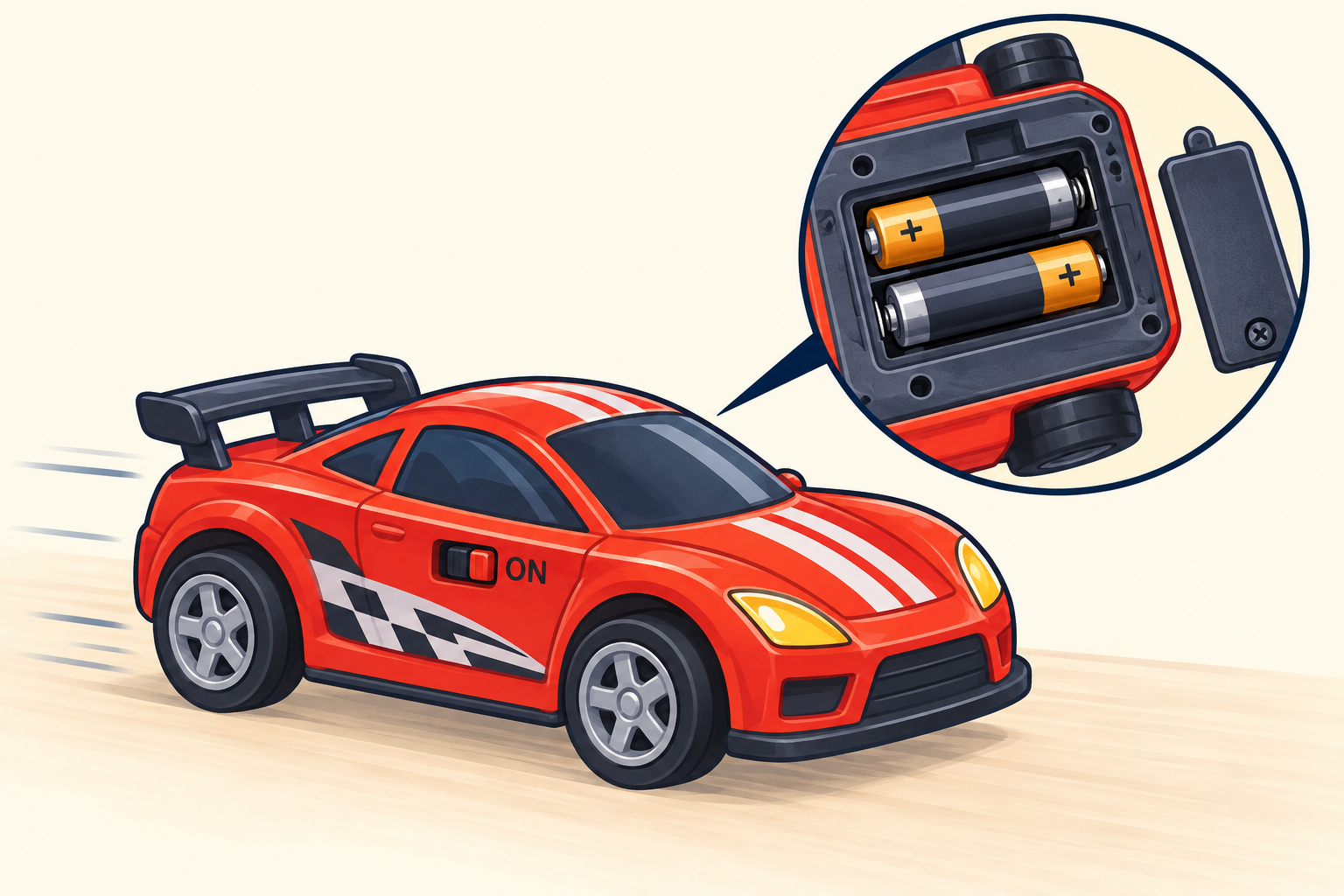
A battery-powered toy moves when its switch is turned on. A pupil says, “It moves, so it is a living thing.” Is the reason sufficient?
Ask your child what the pupil actually saw: the toy moved. Can a non-living thing do that too?
Suggested answer:
“No. A non-living toy can move using power from a battery. Movement alone does not show that something is living.”
The problem is the pupil's reason, not the observation that the toy moved. If your child writes only “No, it is a toy”, ask them to explain why movement isn't enough to prove that it is living.
Worked Example 2: Apply the grouping rule
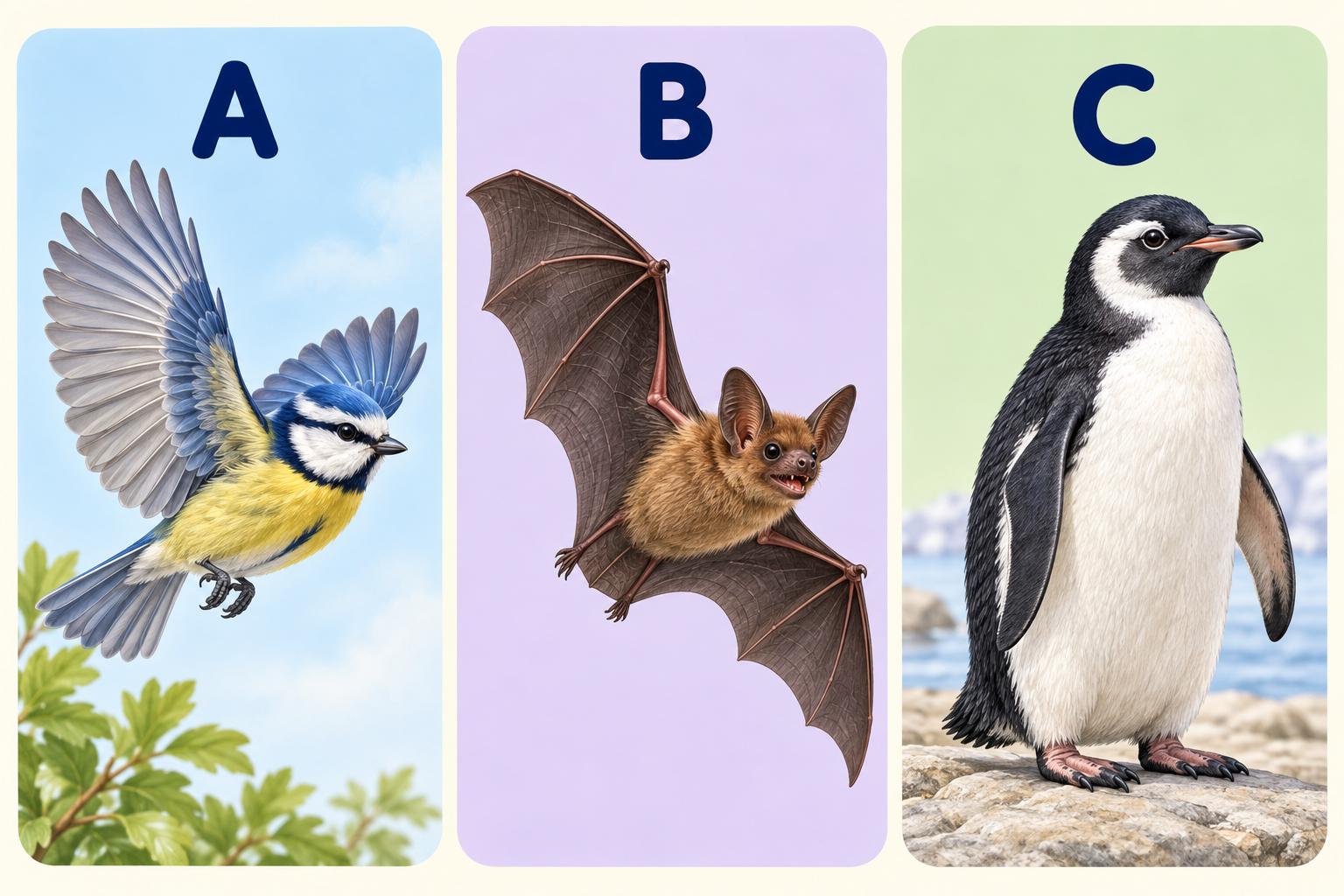
Three fictional animals have these features. Group them by body covering.
Animal | Body covering | Can fly |
A | Feathers | Yes |
B | Fur | Yes |
C | Feathers | No |
It's tempting to put the two flying animals together. But the question asks about body covering, so your child needs to use the feathers and fur column.
Suggested answer:
“A and C belong together because both have feathers. B belongs in a separate group because it has fur.”
Then ask your child to group the animals by whether they can fly. This time, A and B belong together. The same animals can form different groups when you change the rule.
If your child mixes up the rules, ask them to read the instruction aloud and point to the column they need.
Worked Example 3: No flowers in the photograph
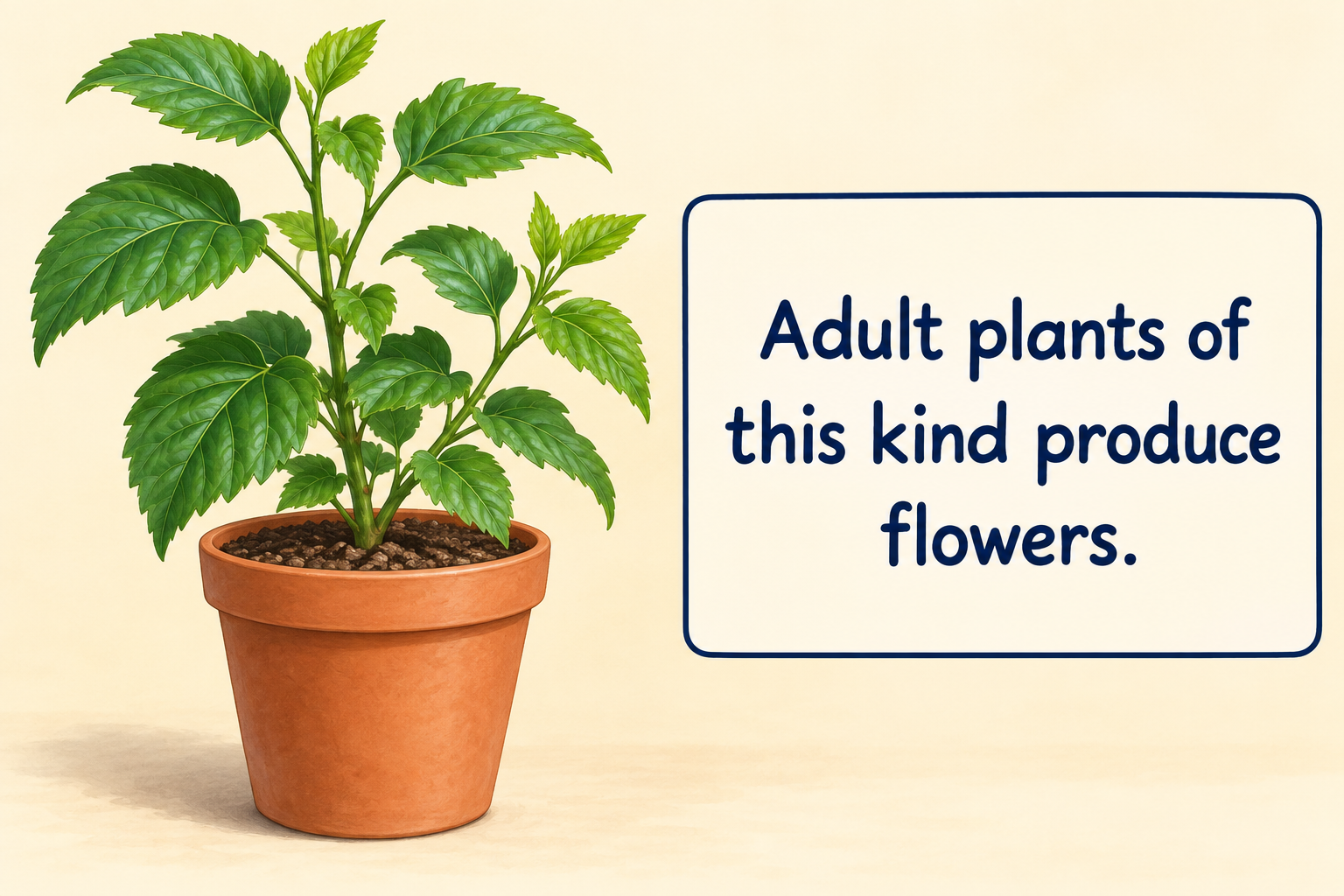
A plant has no flowers today. A label explains that adult plants of this kind produce flowers. Should it be classified as a non-flowering plant?
The picture shows the plant today. The label tells your child something the picture can't: what this kind of plant can do when it is mature.
Suggested answer:
“No. It is a flowering plant because plants of this kind can produce flowers, even though this one has no flowers now.”
If your child chooses “non-flowering”, ask them to read the label again. Having no flowers today doesn't mean that this kind of plant cannot produce flowers.
Worked Example 4: Check every member of a group
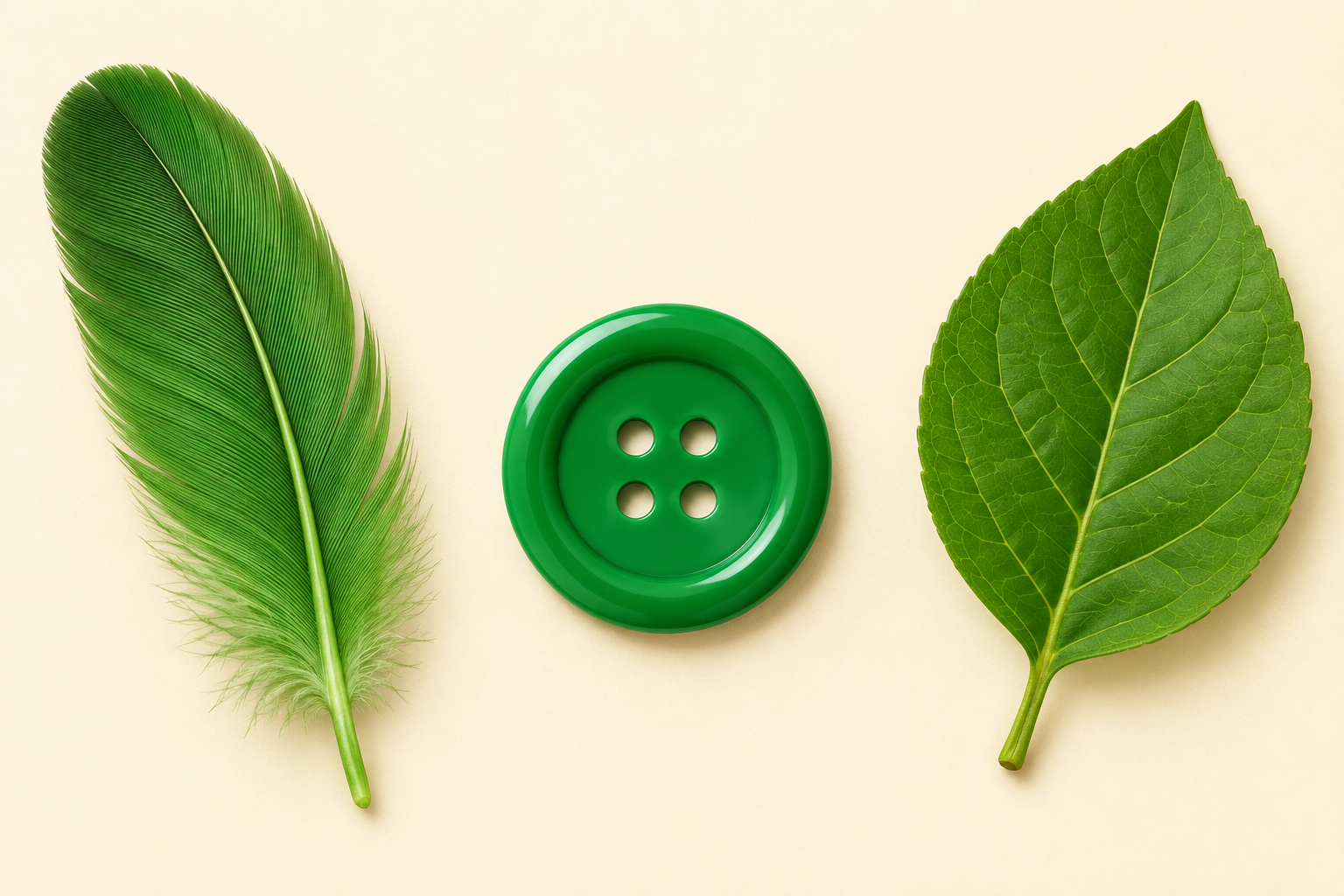
A pupil groups a feather, a plastic button and a leaf together because they are all green. Is colour a valid rule for this grouping? Does it show that they are all living?
Suggested answer:
“Colour is a valid rule if all three objects are green. It does not show that they are living because non-living objects can also be green.”
Green is a perfectly sensible way to group these objects. It just doesn't tell us whether they are living. Keep the discussion on what colour can tell us, rather than getting sidetracked by whether a detached leaf is still alive.
Common Mistakes
Sometimes a child knows the right group but can only explain it with “It looks like one”. Ask what they noticed. Feathers, fur or the number of legs gives them something specific to put in their answer.
A quick look isn't always enough. A sleeping animal may stay still, and a seed may look unchanged all afternoon. Your child may need more information or a longer observation before drawing a conclusion.
Watch for a rule that changes halfway through. Your child might put two animals together because of their legs, then add a third because of its colour. Writing the rule above the group makes it easier to check every member.
How Parents Can Help
Put six safe household objects on a table. Ask your child to sort them in two different ways, such as colour and material. They should name each rule before moving anything.
Next, try four animal picture cards with clearly labelled features. Ask your child to group them and explain why. If they say “because they are the same”, follow up with “What is the same?”
For a final check, change one feature on a fictional animal card. Ask whether it still belongs in the same group and why. Their explanation will tell you more than simply putting the card in the right place.
FAQ
Are fungi plants?
No. Fungi belong to a separate group. At P3, focus on recognising examples such as mushrooms and mould. Your child doesn't need advanced biology to tell you which group they belong to.
Is every moving thing living?
No. A toy car can move, and water can flow. Movement needs to be considered alongside other evidence.
Should we memorise lots of animal names?
Start with a few animals your child can compare and explain. Knowing the features of each group, and using the clues in a question, is more useful than memorising a long list of names.
How does this connect with later topics?
Classification helps children organise organisms before comparing their development. Continue with our P3 life cycles of plants and animals guide to compare how different organisms grow through their stages. Our Primary Science topics by level guide shows where later ideas fit.
How Ottodot Helps With Classification OEQs
In Ottodot's Lower Primary Science classes, teachers model how to read a question, select a relevant characteristic and explain a grouping. Children practise precise words such as “feathers” or “six legs” instead of vague descriptions.
For a longer explanation, children can use Claim, Evidence and Reasoning (CER): give the answer, say what they observed, and explain how that observation supports the answer. A simple identification question may only need a short response.
In Ottodot's OEQ games, children work through scenarios or simulations with prompts before trying questions on their own. Teachers introduce the ideas, then use the games for practice. Feedback and marked weekly homework help them see whether a child is unsure of the Science or needs help putting an answer into words.
If your child can name groups but struggles to explain them, Check my child's fit to explore suitable support.