
Is Online Tuition Suitable for Primary Students?
Is online tuition suitable for primary school children? Use this parent checklist to assess fit, attention, screen routines, and key trial class signals.
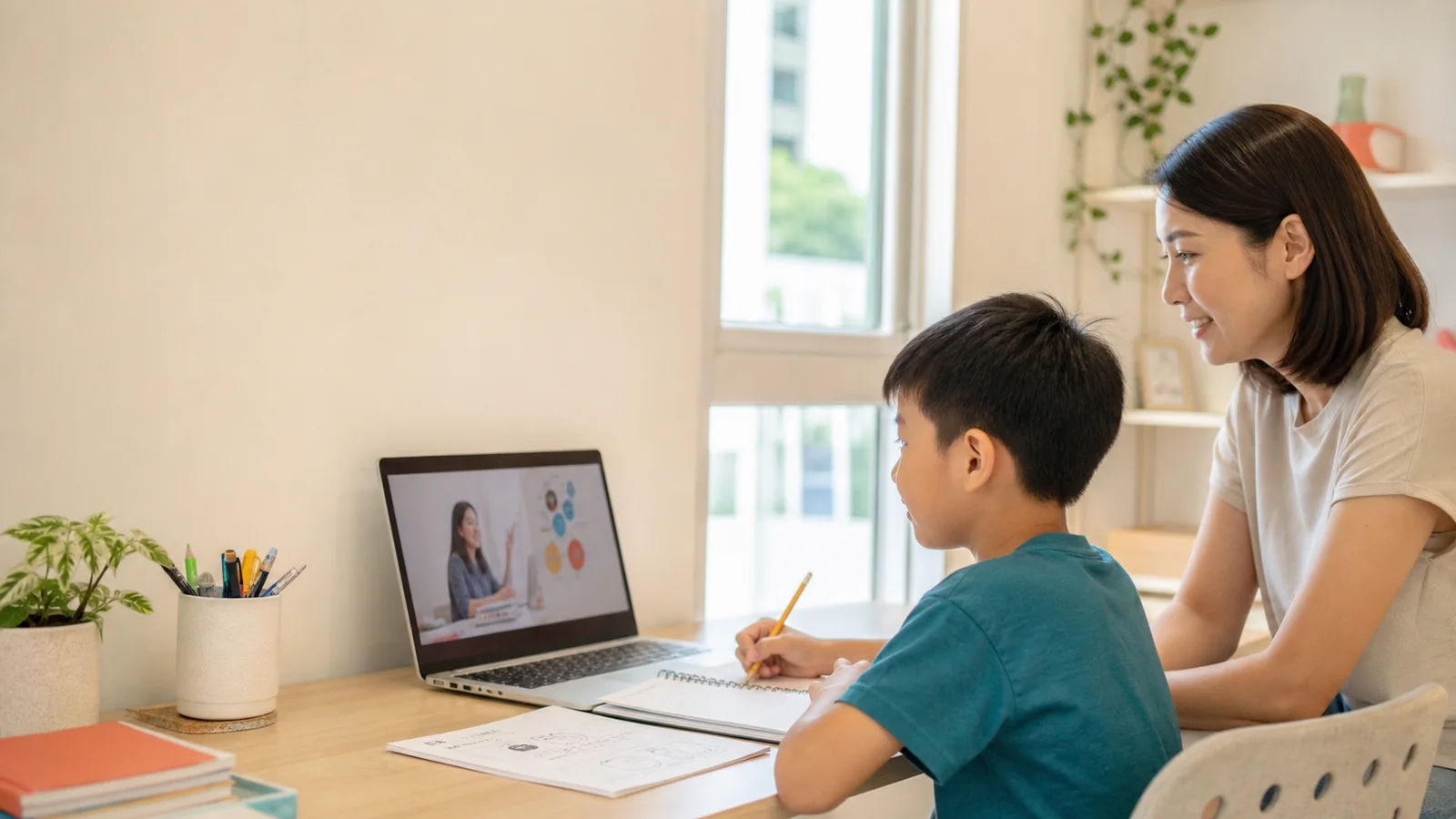
Online tuition can suit primary school students when the child, class format, teacher interaction, and home setup fit. The real test is whether your child can participate, practise, and explain what they have learnt through the screen.
If you are a Singapore parent weighing online tuition against physical tuition, home tuition, or self-paced learning, this guide will help you decide with more confidence. It covers when online tuition works, when it may not be the right fit yet, and what to watch for during a trial class.
Last updated: 23 July 2026
Key takeaways
Online tuition works best when lessons are active, teacher-led, and designed for participation, not passive watching.
Lower primary children may need parent help for the first few sessions, but many become more independent once the screen routine is familiar.
A good online trial class should show whether your child can respond, stay involved, and explain one thing they learnt afterwards.
Online tuition may not be suitable yet if your child needs constant physical redirection or the home environment is too distracting.
For Primary Math and Science, interactive digital tasks can help when they are tied to the MOE syllabus and teacher feedback.
Short answer: online tuition works best when the format fits the child
Online tuition is suitable for primary school students who can follow simple digital routines, respond to a teacher online, and stay involved when the lesson asks them to participate. The response does not have to be spoken. Some quieter children do better through chat, typed answers, written working, or in-class actions. Silence alone is not the problem. The concern is when the teacher has no visible way to tell whether the child is thinking.
This is why the class format matters. A live online class where the teacher asks questions, checks answers, and uses interactive tasks is very different from a child silently watching a video.
For one P3 parent, the screen was not the deciding factor. What mattered was whether the teacher kept her child involved through questions, working, and short digital tasks.
If you are unsure whether the format suits your child, treat the trial class as a fit test. Watch whether your child answers, asks for help, and can tell you what the lesson was about afterwards. start the quiz when you are ready to observe those signals, rather than simply trying another tuition option.
What online tuition does well for primary students
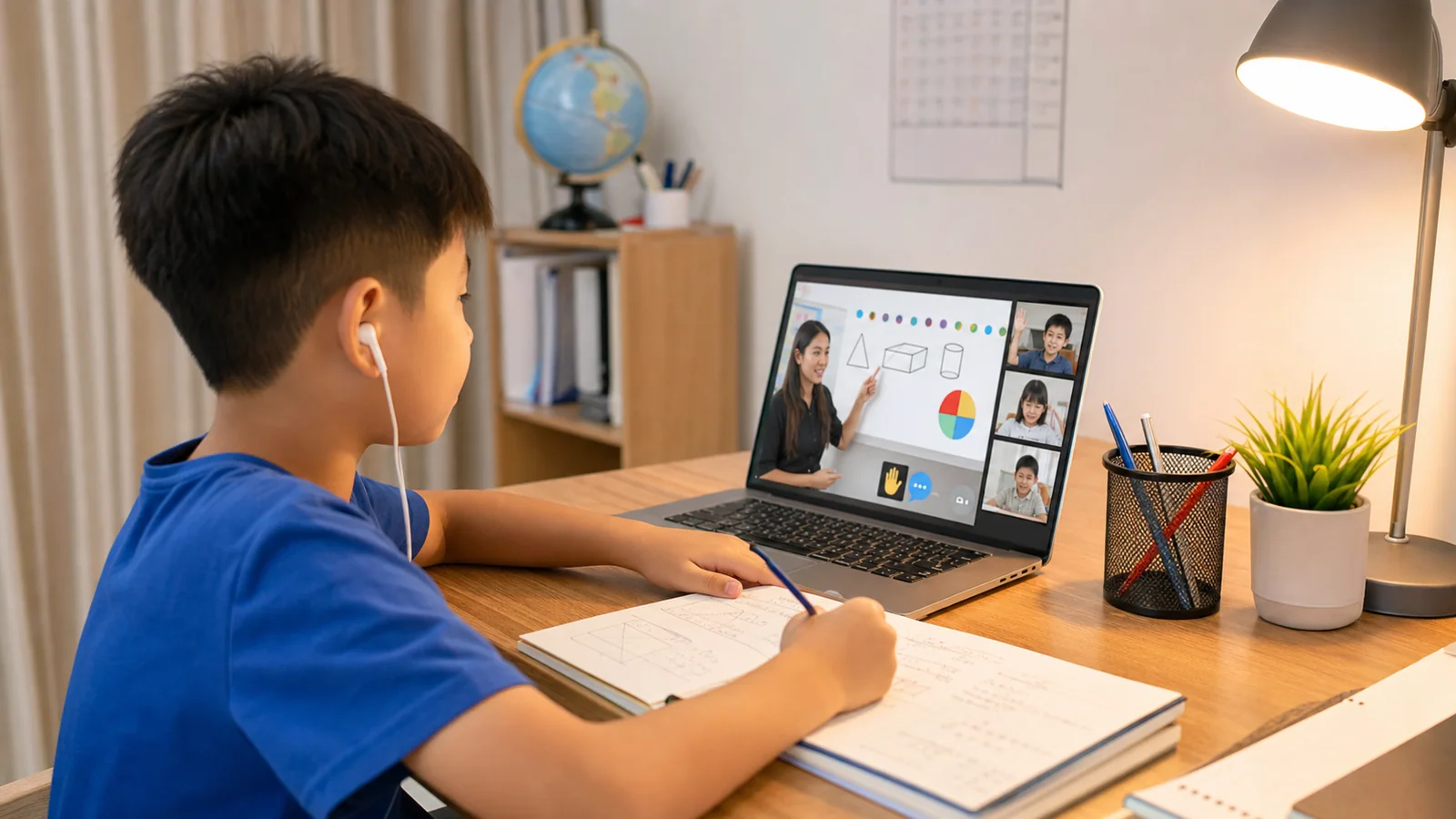
Online tuition is not automatically better than physical tuition. When it is done well, it solves a few real problems for families.
It removes travel time, which matters for Singapore families already juggling school, homework, CCAs, and enrichment. It can also make it easier for teachers to notice repeated misunderstandings over time, especially when your child needs a specific focus such as Primary Science open-ended questions, upper primary Math problem sums, or a more interactive class style.
Online lessons can also use digital tools to make abstract ideas easier to see. A P4 child learning decimals, for example, can move from watching a worked example to calculating change inside a structured digital task. When the child has to answer, explain, and receive correction, the screen becomes part of the lesson instead of just the place where the lesson happens.
When online tuition may not be the best fit yet
Online tuition may not be right for every primary school child right away. If the format is wrong, it can waste money and make the child even more resistant to learning.
Online tuition may not be the best fit yet if:
your child needs a physical adult beside them for multiple weeks
your child cannot follow basic instructions on a device
the home environment is noisy or full of distractions
your child switches away from the class repeatedly and cannot return to task
you need intensive handwritten marking every lesson
the subject support required is more about behaviour management than learning support
This does not mean online tuition will never work. It means the child may need a stronger routine first. Some families start with a parent nearby for the first few sessions, then slowly step back. For others, physical tuition may be better for now.
You can also read our guide on why primary school children lose focus while studying if the main concern is attention across homework in general.
A parent fit checklist for online tuition
Use this checklist before choosing an online tuition programme or after your child's first trial class.
Question | Good Sign | Watch-Out |
Can my child stay seated for 60 to 75 minutes? | Mostly yes, with occasional reminders | Leaves often or needs constant adult prompting |
Can my child respond to a teacher online? | Speaks, types in chat, writes, shows working, or answers through class actions when called | Does not respond in any visible way or explain their thinking |
Does my child engage actively with interactive digital tasks? | Responds to prompts, clicks, types, explains choices, or participates when instructions are clear | Becomes passive and just watches, or gets distracted by unrelated tabs, games, or device controls |
Can my child follow basic screen routines with support? | Needs help at first, but remembers the steps after a few sessions | Needs constant parent control every lesson and cannot return to the class task after switching away |
Is the home setup quiet enough? | Device, audio, and workspace are stable | Siblings, noise, or device switching distracts them |
Does the class design require participation? | Teacher checks responses often | Child can stay passive throughout |
Your child does not need to tick every box before starting. What matters is whether the class helps these habits improve.
A good online class should train participation. For some children, that participation is verbal. For shy children, it may start through chat, typed answers, or showing working on screen. Over time, children should learn how to listen, answer, ask questions, wait for instructions, and return to task after an activity. These are learning habits, as much as technical skills.
Is online tuition suitable for lower primary students?
Online tuition can work for lower primary students, but parents should expect to help more at the start. A P1 or P2 child may need help logging in, joining the right session, staying in the right window, using the microphone, and asking the teacher for help.
That early support is normal.
The goal is not for parents to sit beside the child forever. The goal is to help the child learn the routine, then gradually step back.
After a few sessions, many lower primary children can remember the steps:
open the class link
check that audio works
keep the lesson window open
answer when called
ask for help if they are stuck
return to the class task after an activity
This is also where online tuition can build a healthier relationship with screens. Your child starts to see the device as a place for listening, answering questions, practising, explaining thinking, and learning with a teacher.
That habit does not happen automatically. If the lesson is passive, the child learns passive screen behaviour. If the lesson asks for participation, the child learns that screen time can involve effort too.
This also fits Singapore's wider guidance on purposeful screen use. HealthHub's Grow Well SG parent guidance separates screen use for schoolwork from recreational screen use, while still encouraging parents to keep clear routines and boundaries. For more on that distinction, read our guide to educational screen time for kids.
Is online tuition suitable for upper primary students?
Upper primary students are often more ready for online tuition because they can usually follow digital instructions more independently. For P4, P5, and P6 students, online tuition can be especially useful when the class gives structured practice and feedback.
In upper primary Math, children need to develop multi-step thinking across bar models, ratios, percentages, fractions, and problem sums. A strong online class should look at whether students understand each step, can explain why a method works, and can apply it to unfamiliar questions. The number of exercises completed matters less than whether the child understands the thinking behind them. Teachers should catch and correct misunderstandings while they are still fresh.
In upper primary Science, the issue is often not memorising the concept. Many children know the topic but lose marks because they cannot express the answer clearly. A useful online Science class should include frameworks for tackling open-ended questions, teacher feedback, and repeated exposure to how exam answers are structured.
Ottodot's Primary Math classes and Primary Science classes follow this idea: live teaching, interactive practice, and MOE-aligned tasks that children have to complete actively.
Online tuition vs physical tuition: which should parents choose?
The choice between online tuition and physical tuition should come down to fit, not habit.
Choose Online Tuition If... | Choose Physical Tuition If... |
your child responds well to interactive digital lessons | your child needs physical supervision to stay on task |
travel time is a major constraint | your child cannot focus at home |
your child is comfortable speaking, typing, or showing answers online | your child needs close handwritten correction throughout the lesson |
you want to test fit with a lower-friction trial | your child strongly prefers in-person support |
the class has strong teacher interaction | the online option is mostly passive watching |
There is no prize for choosing one format over the other. A child who thrives in a tuition centre should not be moved online simply because it is convenient. A child who engages better with interactive online tasks should not be forced into physical worksheets simply because that is what parents are used to.
The best format is the one that gets your child learning actively.
If you are already comparing providers, read our separate guide to the best online tuition options in Singapore for primary school. That article compares platforms. This article is about whether the format suits your child in the first place.
What to look for during an online trial class
A trial class is useful only if you know what to observe. During or after the class, ask:
Did the teacher call on your child?
Did your child answer with words, chat, working, typing, or actions?
Could your child explain one thing they learnt after class?
Was the lesson interactive, or mostly lecture?
Did the class size allow the teacher to notice your child?
Did any game or activity reinforce a real Math or Science concept?
Did your child know what to do when they got stuck?
If you want to test this with Ottodot, start the quiz and watch for participation as well as enjoyment.
How Ottodot thinks about online learning
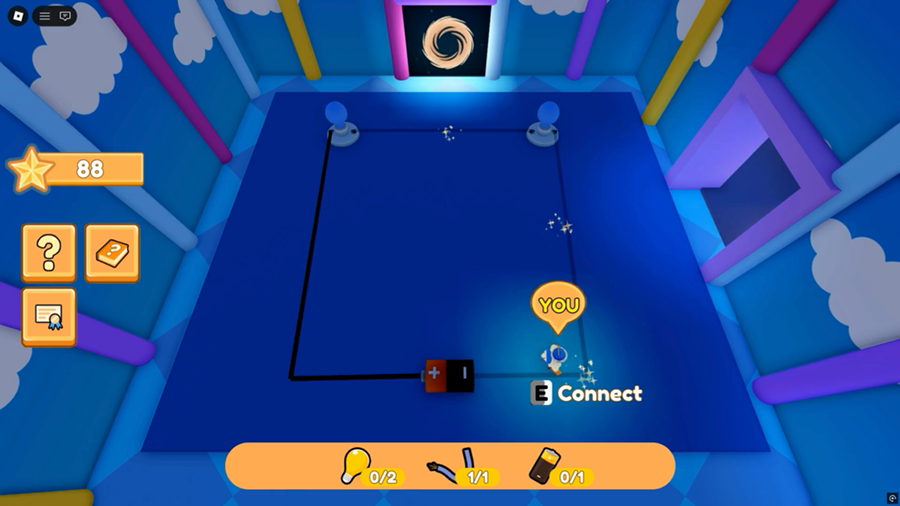
Ottodot teaches online Primary Math and Science through live classes and interactive game-based practice. The point is not screen time for its own sake. The point is participation, practice, and teacher feedback.
At Ottodot, games are learning tasks. A child may be moving through a game, but the work is still Math or Science: reading a graph, calculating change, identifying a fraction, applying a concept, or explaining an answer. The game is the environment. The learning goal still comes from the MOE syllabus.
That is why "Is this online?" or "Is this a game?" is only the starting point.
More useful questions are:
What is my child practising?
Is the teacher checking understanding?
Does my child have to think to progress?
Can my child explain what they learnt afterwards?
If the answer is yes, online learning can become more than a convenient substitute for physical tuition. It can help children build better learning habits on the screens they already use.
FAQ
Is online tuition effective for primary school students?
Online tuition can be effective for primary school students when the class is live, interactive, and designed around active participation. It is less effective when the child mainly watches a screen without teacher feedback or practice.
Is online tuition suitable for P1 or P2 students?
Online tuition can suit P1 or P2 students if instructions are simple and parents help with setup during the first few sessions. If the child still needs constant physical redirection every lesson, it may be better to wait or choose a more supervised format first.
What if my child gets distracted during online tuition?
First, check whether the class design requires participation. A distracted child often needs shorter tasks, regular teacher prompts, and clear screen routines. If the child gets distracted across all homework situations, the issue may be broader than online tuition.
Is online tuition better for Math or Science?
Online tuition can work for both Math and Science, but the class must match the subject. Math needs worked examples and practice. Science needs concept explanation, open-ended answer practice, and feedback on how the child explains ideas.
How do I know after one trial class?
Ask whether your child participated, received teacher attention, and can explain one thing they learnt. If all three are present, the format is worth considering further.
The key takeaway
Online tuition is suitable for primary school students when it creates active learning. Your child needs to participate, practise, receive feedback, and build routines that make the screen a place for learning.
If price is part of the decision, compare primary tuition fees in Singapore by format before choosing between self-paced practice, live online classes, and 1-to-1 support.
For some children, that happens quickly. For others, especially in lower primary, parents may need to help for the first few sessions before independence builds. And for some children, physical tuition may still be the better fit for now.
That is fine. The goal is not to choose the newest format. The goal is to choose the format that helps your child learn.
If you are deciding whether online tuition suits your child, start with observation. start the quiz, watch how your child participates, and decide from what you see.