
Can Online Tuition Work for Distracted Children?
Learn when online tuition can work for distracted children, what class safeguards matter, and what parents should watch during a primary school trial class.
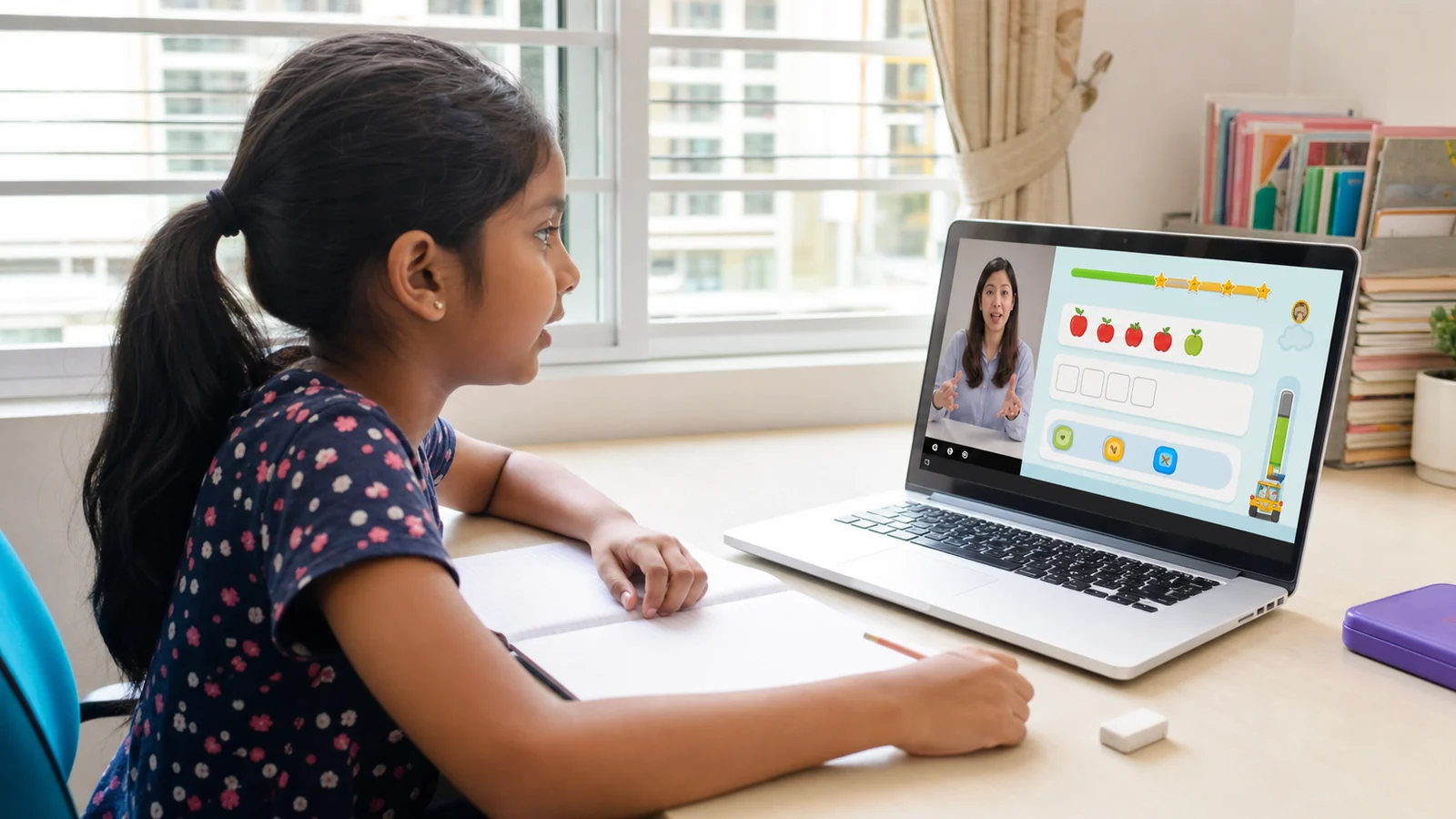
Online tuition can work for a distracted child, but only when the class is live, interactive, and designed so the teacher can see whether your child is taking part. If an online class lets your child sit quietly, switch tabs, or watch passively for an hour, it is unlikely to help much.
This is the worry many Singapore parents have before trying online tuition. If your child already wanders during homework, it is fair to ask whether online lessons will make the problem worse.
The answer depends on the class design, the home setup, and how your child responds during a trial class.
Last updated: 23 July 2026
Key Takeaways
Online tuition works better for distracted children when lessons require frequent responses, not passive watching.
The main warning sign is not fidgeting. It is invisibility: your child can stop participating and nobody notices.
A trial class should show whether your child answers, shows working, rejoins after small distractions, and explains one thing afterwards.
Game-based practice can support attention when it is tied to the MOE syllabus and guided by a teacher.
Physical tuition may be better if your child needs constant adult redirection or cannot stay with an online task at home.
What A Distracted Child Looks Like During Online Tuition
Not every distracted behaviour means your child is not learning.
A Primary 3 child may look away while thinking. A shy child may avoid speaking but still answer in the chat or show working on paper. These are not automatically signs that online tuition is failing.
The bigger concern is whether your child can disappear from the lesson.
Watch for:
switching to another tab
watching the screen without answering
saying "yes" without being able to explain
waiting for other children to answer every question
leaving the seat repeatedly
doing the game task without understanding the Math or Science concept
Here is a simple way to think about it: distracted movement is not always the problem. Disconnected learning is.
Why Online Tuition Can Be Hard For Distracted Children
Online tuition asks a child to learn on the same kind of device that also holds games, videos, browser tabs, and messages. That does not make online learning bad. It means the setup has to be deliberate.
Research on online learning and digital distraction points to the same practical takeaway: children can learn online, but attention depends on the device setup, the child's habits, and how interactive the lesson is.
For primary school children, the biggest risk is a passive lesson. If the teacher talks while children watch, a distracted child can drift without being noticed.
Online tuition for a distracted child needs short activity loops. The teacher explains, then the child answers. The teacher models one step, then the child tries. Attention is easier to hold when the lesson keeps asking the child to do something.
When Online Tuition Can Work For Distracted Children
Online tuition can work well when the class makes participation visible.
Look for these signs during class:
your child responds when called by name
the teacher checks answers often
your child can answer through voice, chat, written working, or class actions
the class includes short tasks instead of long stretches of listening
your child returns to the lesson after small distractions
the teacher notices silence, guessing, or passive nodding
your child can explain one thing after class
This is where game-based learning can help, when it is used properly.
Games hold attention because they give children clear goals, immediate feedback, and a sense of progress. In tuition, the game should not be the reward after learning. It should be part of the learning. This distinction matters because screen-time research, including a 2022 systematic review on screen time and attention, points to risks when screen use is excessive or poorly structured.
For example, a P3 Math class on bar graphs might ask students to read data correctly before they complete a game-based task. The child is not simply "playing". They are practising a concept through action.
If your child struggles with focus during ordinary homework, read Why Your Child Loses Focus While Studying for broader study habits.
Unsure whether your child will respond to online tuition? A trial class is the fairest test. Watch whether your child participates, not whether they sit perfectly still. start the quiz and use the checklist below while you observe.
Safeguards That Help Distracted Children During Online Tuition
The goal is not to remove every possible distraction. The goal is to make it easier for your child to return to the lesson quickly.
Distraction Risk | Safeguard | What Parents Should See |
Child switches tabs | Keep only the lesson window open | Child stays with the class task |
Child watches passively | Teacher asks frequent questions | Child answers every few minutes |
Child fidgets or looks away | Short activity loops | Child returns when prompted |
Home noise | Headphones and a quiet table | Fewer interruptions |
Child says "yes" without understanding | Teacher asks for working | Child explains one step |
Game becomes entertainment | Game task tied to the lesson objective | Child names the concept practised |
These safeguards are simple, but they change the lesson. Daniel, a Primary 5 student, used to keep three browser tabs open during online lessons. During a stricter trial setup, he used one lesson window, headphones, and a notebook. He still looked away sometimes, but he completed the questions and explained a ratio mistake after class.
What To Watch During An Online Trial Class
Do not only ask, "Was my child focused the whole time?" Most primary school children are not perfectly focused for a full lesson, online or offline.
Ask these questions instead:
Did the teacher notice when my child went quiet?
How often did my child need to respond?
Could my child answer by speaking, typing, choosing, writing, or showing working?
Did the activity require thinking, or was my child mostly watching?
Could my child explain one concept, step, or common mistake after class?
Did my child avoid the lesson afterwards, or seem willing to try again?
One useful test is the "teach-back" question: "What is one thing you learnt today? Can you show me?"
The answer does not need to be polished. "The denominator tells how many equal parts there are" is enough to show that something landed. If your child says, "I don't know, we did stuff," the class may have been too passive.
When Physical Tuition Or 1-to-1 May Be Better
Online tuition is not the right fit for every distracted child.
Physical tuition may be better if your child:
leaves the seat repeatedly and cannot be redirected online
needs an adult beside them for the entire session every week
has a home environment that is too noisy
refuses to respond in any visible way
becomes anxious in an online group
needs heavy handwritten marking every week
has deep foundational gaps that need targeted remediation
This is not a failure. It is fit.
Some children need physical structure first. Some need 1-to-1 support before moving into a small group. Others do well online once the routine is familiar.
If you are comparing formats, read Best Online Tuition in Singapore for Primary School and Educational Screen Time for Kids.
How Ottodot Designs Online Classes For Participation
At Ottodot, online tuition is not meant to be a child watching a teacher talk for an hour. Our live online Primary Math and Science classes combine teacher guidance, MOE-aligned lesson objectives, worked examples, and game-based practice.
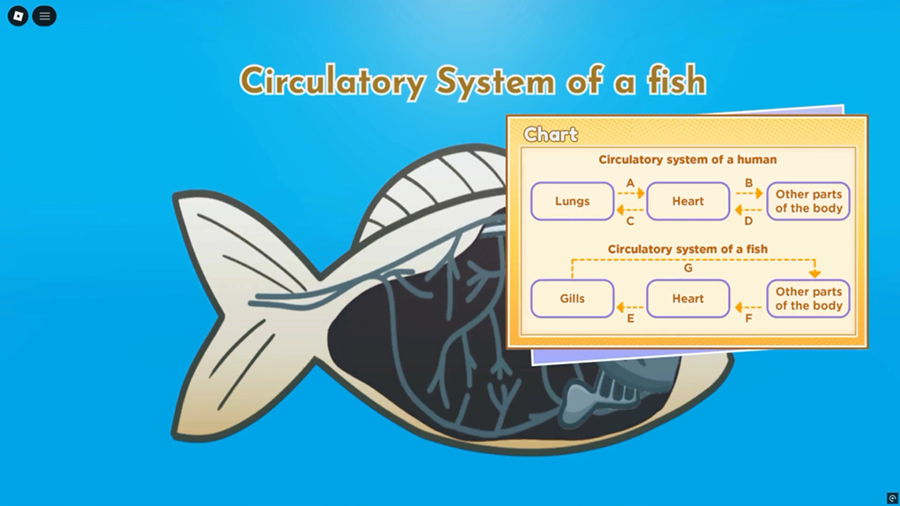
For Math, that might mean practising number bonds, fractions, bar models, decimals, or heuristics through short tasks. For Science, it might mean identifying evidence from a scenario or applying a concept to an open-ended question. The game-based part gives children a reason to participate, while the teacher keeps the learning tied to the concept.
Parents can learn more about Ottodot's Primary Math classes and Primary Science classes.
Parent Setup Checklist Before The First Online Class
Before your child's first online tuition class:
Close unrelated tabs and apps.
Prepare headphones and charger.
Choose a quiet table without toys nearby.
Keep water nearby so your child does not need to leave.
Do a login check 10 minutes before class.
Tell your child the goal: "Answer when the teacher asks and show your working."
For P1 to P3, expect to help with setup at first.
Frequently Asked Questions
Is online tuition suitable for children with short attention spans?
Yes, if the class is live, interactive, and broken into short response tasks. It is less suitable if the lesson is mostly passive watching.
What if my child plays games or switches tabs during online tuition?
Solve the setup before judging the format. Keep only the needed tabs open and set clear expectations. If your child still cannot stay with the task, physical tuition may be a better fit for now.
Should I sit beside my child during online tuition?
For younger primary children, you may need to help with setup for the first few sessions. After that, try stepping back. A good online class should not require a parent beside the child every week.
Is physical tuition better for distracted children?
Sometimes. Physical tuition may be better when a child needs constant adult redirection or heavy handwritten correction. Online tuition may work when the child responds to teacher prompts and participation stays visible.
Can game-based tuition become too distracting?
Yes, if the game is treated as entertainment. Game-based tuition works best when each task is tied to a Math or Science objective and the teacher asks students to explain what they are doing.
The Key Takeaway
The real question is whether the class helps your child participate. Look for teacher check-ins, short activity loops, visible working, game-based practice tied to MOE concepts, and a child who can explain one thing after class.
If your child needs constant physical redirection, online tuition may not be the right first step. If your child responds to interactive tasks, online tuition may work better than you expect.
start the quiz and see whether game-based online learning is a fit for your child.